Seamless collaboration and efficient processes are becoming increasingly important in the fashion industry. At FashionUnited eBusiness, we believe in improving EDI processes and making them work better for your business. An essential part of this is the implementation of Electronic Data Interchange (EDI).
What is EDI and how does it actually work? Discover below how EDI can help businesses work more efficiently and support growth in the fashion industry.
At FashionUnited eBusiness, EDI is for everyone and tailored to your needs.
Electronic Data Interchange: simply explained
What is EDI?
It may sound technical, but the idea is actually very simple.
EDI stands for Electronic Data Interchange. It means that businesses exchange B2B data with each other in a standardised and automated way.
EDI explained: a simple example
A retailer orders 100 pairs of shoes from a supplier.
The order is sent directly from the retailer’s system and automatically arrives in the supplier’s system.
No email with an attachment. No one has to enter the order manually again.
The systems handle the exchange automatically.
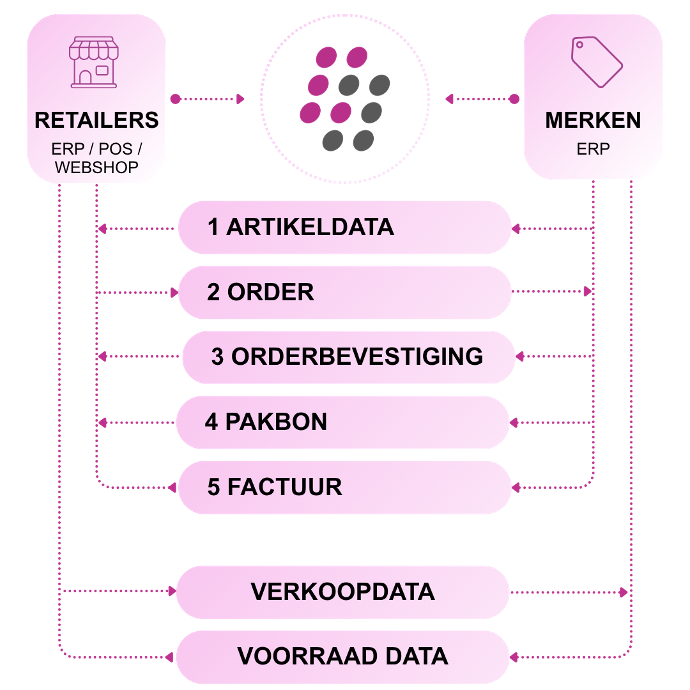
Data exchange: from orders to product data
EDI is not just about orders. Businesses exchange all kinds of information to make sure an order is processed correctly. This means different types of information can become part of one digital data flow.
Orders
From an order placed by the retailer to processing by the supplier.
Artikeldata
Product information needed to sell a product correctly. This includes the product number, description, price and other product details.
Business documents
Other B2B data can also be exchanged digitally and automatically between retailers and suppliers.
EDI software: one connection for your data
EDI software allows different systems to understand each other. A retailer may use a different system than a supplier. However, they still need to be able to exchange the same information. EDI software translates and processes this data so that it matches the system of the recipient.
Connect to your systems
You don't all need to work with the same system. FUeB makes it possible for different systems to communicate with each other. You can exchange data with your own ERP or software system without having to enter everything manually.
Process data automatically
Information can be received, processed and forwarded automatically. This includes orders, product data and other B2B data. This means you don't have to enter data manually every time, reducing the risk of errors.
Work with different partners
A retailer or supplier often works with multiple business partners. FUeB makes it possible to exchange data with different retailers, suppliers and systems. This helps you stay organised, even when you work with multiple partners.
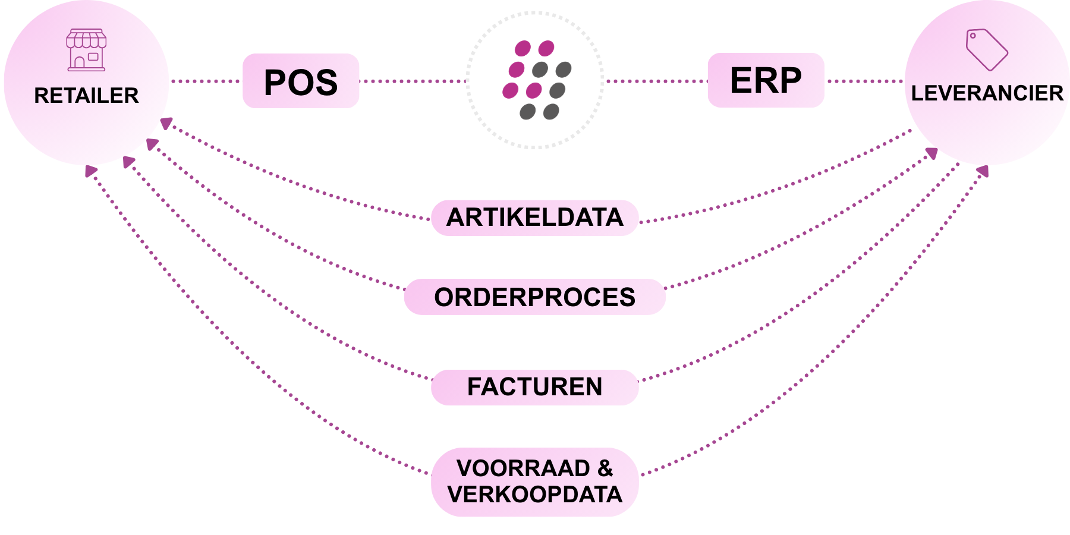
Product data management with EDI
Good product information is the foundation of a good product listing. When a supplier introduces a new product, the retailer needs to have the right information. This includes the product number, description, price and other product details. With EDI, this information can be shared directly with business partners. This means everyone works with the same up-to-date product data.


Frequently asked questions about EDI
EDI stands for Electronic Data Interchange. It is a way to automatically and digitally exchange B2B data between the systems of different businesses. This can include orders, product data, delivery notes and invoices. With EDI, data does not need to be entered manually via email or Excel.
With EDI, data is automatically sent from one company's system to another company's system. For example, a retailer can place an order directly from their own ERP system. The order is then automatically processed in the supplier's system. This allows business data to be exchanged quickly and without manual data entry.
An EDI connection links the systems of two businesses, allowing them to exchange business data automatically. The connection ensures that orders, product data and other business documents can be sent directly from one system to another.
An EDI connection links the systems of two businesses, allowing them to exchange business data automatically.
EDI makes the exchange of B2B data faster and less prone to errors. There is less need for manual data entry, orders can be processed automatically and businesses save time.
Yes. An EDI solution can be connected to different ERP and business systems. This allows data such as orders and product data to be exchanged automatically between your system and that of a business partner.
A webshop integration mainly focuses on sales through an online store. EDI focuses on the automatic exchange of business data between companies. For example, EDI can be used to exchange orders, product data, delivery notes and invoices between retailers and suppliers.
Yes. EDI is widely used in the fashion, footwear and sports industries. Retailers and suppliers use EDI to exchange orders, product data and business documents. For businesses with many products and transactions, automated data exchange can reduce a lot of manual work.
No. EDI can be used by both large and smaller businesses. Especially when a retailer or supplier processes a lot of orders and product data, automated data exchange can save a significant amount of manual work.
B2B data is business information that companies exchange with each other. In retail, this can include product information, prices, orders, inventory data and invoices. EDI makes it possible to exchange much of this data automatically between businesses.
FUeB focuses specifically on the fashion, footwear and sports industries and connects retailers, suppliers and systems. This allows businesses to exchange B2B data automatically and manage processes around orders and product data more efficiently.